Blog

Lawsuit against state officials for privacy violation moves forward

Welch v. Theodorides-Bustle, — F.Supp.2d —, 2010 WL 22365 (N.D. Fla., January 5, 2010)

Plaintiff sued the Florida Department of Highway Safety and Motor Vehicles and a number of state officials for violation of the federal Driver’s Privacy Protection Act, 18 USC §2721-25. Plaintiff claimed that the defendants turned over a large amount of protected personal information to a private party, and that that party then further disclosed the information to another entity that published the information on the web.

Florida driver

As a result, the personal information of a number of Florida drivers became available for viewing online by anyone.

The defendants moved to dismiss the suit for failure to state a claim. The court denied the motion.

There is an exception to the Driver’s Privacy Protection Act’s prohibition on disclosure of personal information when the disclosure is made by a government agency “in carrying out [the agency’s] functions.” The defendants did not deny that their conduct would violate the Act, but argued that the exception applied. The defendants essentially argued that the mere fact that the disclosure was made by a governmental entity made the disclosure to be automatically carried out in connection with that agency’s function.

The court rejected this ipse dixit assertion, holding that disclosure by a government agency being treated as automatically protected would accordingly make any violation of the Act by the government impossible.

Similarly, the court rejected the defendants’ argument that language in the contract with the entity to which the information had been provided rendered the disclosure proper. The receiving entity promised to use the information only for a proper purpose. But the self-serving recitals in that agreement, without specifying in detail what a proper purpose would be, would not bind third parties.

Alligator car photo courtesy Flickr user jeffdhartman under this Creative Commons license.

Court orders anonymous GQ blogger and accused hacker to be identified

Advance Magazine Publishers v. Does 1-5, No. 09-10257 (S.D.N.Y. Dec. 22, 2009)

Someone accessing the Internet using an AT&T IP address hacked into Conde Nast’s computer system and acquired and published copies of editorial content and the images that were to be in the December 2009 issue of GQ. Those images were later published anonymously on a blog hosted by Google’s Blogger service.

masked cutie

Conde Nast sued in federal court alleging copyright infringement (for the posting of the content) and violation of the Computer Fraud and Abuse Act (for the unauthorized accessing of the Conde Nast servers). Since the identity of the person or persons committing these acts was not known, Conde Nast sued “John Does 1 through 5”. It then filed a motion with the court for permission to serve subpoenas on AT&T and Google to get information with which to give the defendants a name.

The court granted the motion and authorized the subpoenas.

Rule 26(d)
requires that a party demonstrate good cause before expedited discovery will be permitted. In this case, Conde Nast gave four reasons supporting good cause:

  • It had sufficiently pled causes of action under the Copyright Act and the Computer Fraud and Abuse Act
  • AT&T’s server activity logs and Google’s registration data were at risk of being overwritten or purged
  • The scope of the information requested was appropriate — the only items being requested were those sufficient to name the defendants
  • Without the identifying information, the case would be at a standstill and Conde Nast might be left without a remedy

For these reasons the court ordered the anonymous participants to be unmasked.

Masked woman photo courtesy Flickr user Alaskan Dude under this Creative Commons license.

BitTorrent site liable for Grokster style inducement of copyright infringement

Columbia Pictures v. Fung, No. 06-5578 (C.D. Cal. December 21, 2009).

This case came out three weeks ago, but it’s pretty significant and hasn’t gotten the coverage and analysis it deserves. Of course Professor Goldman covered it in a timely manner. But his blogging agility surpasses that of us mere mortals.

Fung and his company Isohunt Web Technolgies ran a number of popular BitTorrent sites where users could find and share torrent files that permitted the downloading of video files. [Here’s how BitTorrent works.] Several Hollywood studios sued Fung and his company for copyright infringement over the operation of the sites and the activites of the sites’ users.

Ostriches don't actually put their head in the sand

The plaintiffs moved for summary judgment on the copyright claims. The court granted the motion.

The court based its ruling on a theory of “secondary liability” — that is, Fung and his company were liable for the copyright infringement (i.e., the distribution of copyrighted movies and TV shows) committed by users of the sites. More specifically, the court held that the defendants induced copyright infringement, citing to the 2005 U.S. Supreme Court decision in MGM v. Grokster.

The defendants’ inducement of copyright infringement

Under Grokster, “one who distributes a device with the object of promoting its use to infringe copyright, as shown by clear expression or other affirmative steps taken to foster infringement, is liable for the resulting acts of infringement by third parties.”

In this case, the court found numerous ways that the defendants had induced copyright infringement. Among the defendants’ activities that gave rise to secondary liability were:

  • Providing categories on the sites to assist users in locating and downloading currently-popular movies, and making express statements to third parties to encourage copyright infringement
  • Providing technical support to users who desired to download and view copyrighted materials.
  • Implementing technical features (such as crawling The Pirate Bay) to locate copyrighted material
  • Relying on an advertising based business model that benefitted from high volume traffic drawn by the availability of infringing material

Rejection of the defendants’ DMCA affirmative defense

The court rejected the defendants’ argument that the safe harbors of the Digital Millennium Copyright Act (DMCA) should shield the torrent sites form liability.

A service provider can sail its ship into a DMCA safe harbor if, among other things, it does not have actual knowledge of, or is not willfully blind to, infringing activities being undertaken through its system. Said another way, the limitation of liability afforded by the DMCA is lost if the provider becomes aware of a “red flag” from which infringing activity is apparent.

The court found that the defendants did not qualify for safe harbor protection because of the “overwhelming” evidence that the defendants knew of the infringing activity. The court borrowed from the Aimster case to state that the defendants would not have known of the infringement only if they engaged in an “ostrich-like refusal” to observe what was happening. That willful blindess would not serve as an excuse.

Ostrich photo courtesy of Flickr user Pedronet under this Creative Commons license.

How Section 230 is like arson laws when it comes to enjoining website operators

The case of Blockowicz v. Williams, — F.Supp.2d —, 2009 WL 4929111 (N.D. Ill. December 21, 2009), which I posted on last week is worthy of discussion in that it raises the question of whether website operators like Ripoff Report could get off too easily when they knowingly host harmful third party content. Immunity under 47 U.S.C. 230 is often criticized for going too far in shielding operators. Under Section 230, sites cannot be treated as the publisher or speaker of information provided by third party information content providers. This means that even when the site operator is put on notice of the content, it cannot face, for example, defamation liability for the continued availability of that content.

Don’t get me wrong — the Blockowicz case had nothing to do with Section 230. Although Ben Sheffner is routinely sharp in his legal analysis, I disagree with his assessment that Section 230 was the reason for the court’s decision. In the comments to Ben’s post that I just linked to, Ben gets into conversation with Ripoff Report’s general counsel, whom I believe correctly notes that the decision was not based on Section 230. Ben argues that had Section 230 not provided immunity, the plaintiffs would have been able to go after Ripoff Report directly, and therefore Section 230 is to blame. That’s kind of like saying if arson were legal, plaintiffs could just go burn down Ripoff Report’s datacenter. But you don’t hear anyone blaming arson laws for this decision.

Even though Section 230 didn’t form the basis of the court’s decision in favor of Ripoff Report, the notion of a website operator “acting in concert” with its users is intriguing. Clearly the policy of Section 230 is to place some distance, legally speaking, between site operator and producer of user-generated content. And the whole idea behind the requirement in copyright law that infringement must arise from a volitional act and not an automatic action of the system is a first cousin to this issue. See, e.g., Religious Tech. Center v. Netcom, 907 F.Supp. 1361, 1370 (N.D. Cal. 1995) (“[T]here should still be some element of volition or causation which is lacking where a defendant’s system is merely used to create a copy by a third party”).

For the web to continue to develop, we are going to need this continued protection of the intermediary. We’re going to see functions of the semantic web appear with more frequency in our everyday online lives. From a practical perspective, there will be even more distance — a continuing divergence between a provider’s will and the nature of the content. So as we get into the technologies that will make the web smarter, and our experience of it more robust and helpful, we’ll need notions of intermediary immunity more and not less.

That notion of an increasing need for intermediary immunity underscores how important it is that intermediaries act responsibly. No doubt people misunderstand the holdings of cases like this one. By refusing to voluntarily take down obviously defamatory material, and challenging a court order to do so, Ripoff Report puts a bad taste in everyone’s mouth. Sure there’s the First Amendment and all that, but where’s a sense of reasonable decency? Sure there’s the idea that free flowing information supports democracy and all that, but has anyone stopped to think what could happen when the politicians get involved again?

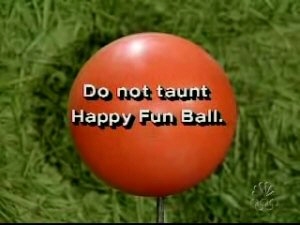
Do not taunt Happy Fun Ball

We are fortunate that Congress was as equinamimous and future-minded as it was in 1996 when it enacted the immunity provisions of Section 230. But results like the one in the Blockowicz case are going to be misunderstood. There’s a hue and cry already about this decision, in that it appears to leave no recourse. Section 230 wasn’t involved, but it still got the blame. Even the judge was “sympathetic to the [plaintiffs’] plight.”

So maybe we need, real quickly, another decision like the Roommates.com case, that reminds us that website operators don’t always get a free ride.

Injunction against defamatory content could not reach website owner

Blockowicz v. Williams, — F.Supp.2d —, 2009 WL 4929111 (N.D. Ill. December 21, 2009)

(This is a case from last month that has already gotten some attention in the legal blogosphere, and is worth reporting on here in spite of the already-existing commentary.)

Plaintiffs sued two individual defendants for defamation over content those defendants posted online. The court entered an order of default after the defendants didn’t answer the complaint. The court also issued an injunction against the defendants, requiring them to take down the defamatory material.

grasping

When plaintiffs were unable to reach the defendants directly, they asked the websites on which the content was posted — MySpace, Facebook, Complaints Board and Ripoff Report — to remove the material.

All of the sites except Ripoff Report took down the defamatory content. Plaintiffs filed a motion with the court to get Ripoff Report to remove the material. Ripoff Report opposed the motion, arguing that Rule 65 (the federal rule pertaining to injunctions) did not give the court authority to bind Ripoff Report as a non-party. The court sided with Ripoff Report and denied the motion.

Federal Rule of Civil Procedure 65 states that injunctions bind the parties against whom they are issued as well as “other persons who are in active concert or participation with” those parties. In this case, the court looked to the Seventh Circuit opinion of S.E.C. v. Homa, 514 F.3d 674 (7th Cir. 2008) for guidance on the contours of Rule 65’s scope. Under Homa, a non-party can be bound by an injunction if it is “acting in concert” or is “legally identified” (like as an agent or employee) with the enjoined party.

Plaintiffs argued that Ripoff Report was acting in concert with the defamers. Plaintiffs looked to Ripoff Report’s terms of service, by which posters to the site give an exclusive copyright license to and agree to indemnify Ripoff Report. Those terms also state that Ripoff Report will not remove any content for any reason. Plaintiffs read this combination of terms to stand for some sort of arrangement whereby Ripoff Report agreed to be a safe haven for defamatory material.

The court rejected this argument, finding there was no evidence in the record that Ripoff Report intended to protect defamers. Moreover, there was no evidence that Ripoff Report had communicated with the defendants in any way since the entry of a permanent injunction, or otherwise worked to violate the earlier court order requiring defendants to remove the materials.

Other commentary on this case:

Grasping photo courtesy Flickr user Filmnut under this Creative Commons license.

Browsewrap website terms and conditions enforceable

Major v. McAllister, — S.W.3d —, 2009 WL 4959941 (Mo. App. December 23, 2009)

The Missouri Court of Appeals has issued an opinion that reflects a realistic grasp of how people use the web, and also serves as a definitive nod to self-responsibility. The court refused to accept a website end user’s argument that she should not be bound by the website terms and conditions that were presented to her in the familiar “browsewrap” format.

Click

Ms. Major used a website called ServiceMagic to find some contractors to remodel her home in Springfield, Missouri. Each page she saw during the process had a link to the website terms and conditions. At the point where she submitted her contact information to facilitate the signup process, she was presented with a link to the website’s terms and conditions. We’ve all seen this countless times — the link read, “By submitting you agree to the Terms of Use.”

Major admitted she never clicked on the link and therefore never read the terms and conditions. But had she clicked through she would have read a forum selection clause providing that all suits against ServiceMagic would have to be brought in Denver, Colorado.

When Major sued ServiceMagic in Missouri state court, ServiceMagic moved to dismiss, citing the forum selection clause. The trial court granted the motion and Major sought review. On appeal, the court affirmed the dismissal.

Major relied heavily on Specht v. Netscape, 306 F.3d 17 (2d Cir. 2002). The court in Specht held that end users of Netscape’s website who downloaded a certain application were not bound by the terms and conditions accompanying that download because the terms were not visible on the screen without scrolling down to see them.

But in this case the court found the terms and conditions (including the forum selection clause) to be enforceable. In contrast to Specht, the ServiceMagic site did give immediately visible notice of the existence of the terms of the agreement. Even though one would have to click through to read the terms, the presence of the link was sufficient to place the website user on reasonable notice of the terms, and subsequent use by the end user manifested assent to those terms.

Click image courtesy Flickr user smemon87 under this Creative Commons license.

Some thoughts on jurors doing internet research – keep the process clamped down

People v. Carmichael, — N.Y.S.2d —, 2009 WL 5126920, (N.Y.A.D. 4 Dept., Dec 30, 2009)

A recent decision from a New York appellate court gives us occasion to think about the problem of jurors doing web research to find information relating to the case.

The Carmichael Case

A jury convicted one Carmichael of murder. One of the jurors did some internet research during the trial on the question of whether the gunshot wound on the victim was a close contact wound or was inflicted from a distance. When Carmichael discovered the juror’s research, he moved to set aside the jury’s verdict. He argued that the juror’s misconduct caused prejudice to a substantial right.

Jurors Only -- no outside influences!

The trial court denied the motion and Carmichael sought review. On appeal, the court held that the trial court properly denied the motion to set aside the verdict.

It found that Carmichael suffered no prejudice to a substantial right because the juror’s testimony at a hearing on the matter showed that the information found during the internet research was not helpful, that he remained confused even after the research, and that he based his verdict only on the evidence presented at trial.

The Modern Person’s Connection to the Web

The sense of connection that the modern person feels within the web causes an intriguing disruption to the traditional method of the jury trial system. It calls us to evaluate whether it’s fair to characterize conduct like that of the Carmichael juror as “misconduct.” As this Time article notes (and as we all know from our own experiences), it is natural for jurors to desire background, contextual information about the matter being considered.

The tension applies to the problem of jurors acquiring information concerning the case as well as the problem of jurors distributing information they have, or making inappropriate connections with others in the process. The past few months have shown us, for example, stories of improper attempts by jurors to friend witnesses, prohibitions on judges connecting with lawyers, questions of witness intimidation through Facebook, and orders prohibiting courtroom tweeting.

In most instances this tendency to want and share information is a positive attribute. Skepticism, rationality and transparency are noble qualities. But information crossing the abstract borders of the trial court can jeopardize the fairness that the process has historically ensured. It’s no small problem. Even Britain’s Lord Chief Justice recognizes that the ability to so easily get information external to the case “changes the whole orality tradition [i.e., oral testimony] with which we are familiar.”

It’s not a new problem. I was writing about it almost five years ago. Here’s a post I wrote and a podcast episode I did about it back in 2005.

Keep ’em Clamped Down

At the most general level there are two options for handling the present tension. Courts could assimilate the modern tendency and simply leave the process unchecked — allowing information to flow in and out as if on the breeze. The other option would be to clamp down, as the courts in Michigan have done, enacting rules that prohibit jurors doing research and disseminating information during the proceedings.

Our tradition should tell us to go with the latter, that is, clamping down. Looking at it a certain way, there is nothing different in kind occasioned by modern communication methods that mandates information to be free flowing. Though in the past it would have been less feasible, it would not have been impossible for jurors to share information during the process or do external research during off hours. To foster the fairness of the proceedings, courts have historically fortified the abstract walls of the courtroom, permitting the jurors only to consider the evidence made a part of the record. Think about it — that’s the entire basis for having rules of evidence in the first place.

So even though it’s easier to get information these days, and even though jurors want to do that (and in most situations outside of jury duty should be encouraged to do so), there is no good reason not to enforce strict regulations prohibiting outside research. Whether a juror should be permitted to share information during the process is more subtle — there are more concerns there about openness in the process implicated. Absent national security or other similar reasons, we generally don’t want proceedings to be incommunicado.

The solution should not be an assimilation and accompanying dissolving of the borders of the walls around the process, but should come from education of the jury pool. The quasi-closed system of the proceedings, moderated by rules of evidence helps ensure fairness and accuracy. To the extent jurors are helped to understand such a notion of “information regularity,” the more likely they are to see that it makes good sense.

Jurors only photo courtesy Flickr user dmuth under this Creative Commons license.

Website drives off with Section 230 win over Chevy dealer

Nemet Chevrolet sued the website Consumeraffairs.com over some posts on that website which Nemet thought were defamatory and interfered with Nemet’s business expectancy. The website moved to dismiss the lawsuit, claiming that the Communications Decency Act at 47 U.S.C. 230 immunized the website from the lawsuit.

But when we're driving in my Malibu, it's easy to get right next to you. . . . "

The court dismissed the action on Section 230 grounds and Nemet sought review of the dismissal with the Fourth Circuit Court of Appeals. The appellate court affirmed the dismissal.

Section 230 precludes tort plaintiffs from holding interactive computer services (like website operators) liable for the publication of information created and developed by others. Most courts (like the Fourth Circuit) consider Section 230’s protection to be a form of immunity for website operators from lawsuits arising over third party content.

But that immunity disappears if the content giving rise to the dispute was actually created or developed by the operator and not by a third party. In those circumstances the operator also becomes an information content provider. And there is no Section 230 immunity for information content providers.

That’s where Nemet steered its argument. It alleged that the website was a non-immune information content provider that created and developed the offending content.

Nemet raised two general points in its argument. It claimed that the website’s structure and design elicited unlawful content, and that the site operator contacted individual posters to assist in revisions to the content. It also claimed that the site operator simply fabricated a number of the offending posts.

Applying the pleading standards on which the Supreme Court recently elaborated in Ashcroft v. Iqbal, the court found Nemet’s claims that the site operator was actually an information content provider to be implausible.

As for the structure and design argument, the court differentiated the present facts from the situation in Fair Housing Council of San Fernando Valley v. Roommates. com. In Roommates.com, the court found that the website was designed to elicit information that would violate the Fair Housing Act. In this case, however, there was nothing unlawful in inviting commentary on goods or services, even if it was for the purposes of drumming up business for plaintiffs’ class action lawyers.

As for the other arguments, the court simply found that the allegations did not nudge the claims “across the line from conceivable to plausible.” The court found the argument that the website fabricated the posts to be particularly not creditable, in that Nemet’s allegations relied mainly on an absence of information in its own records that would connect the post to an actual customer.

On balance, this decision from the Fourth Circuit shows that Section 230 immunity is as alive and well at the end of the “oughts” as it was a dozen years before when the Fourth Circuit became the first federal appellate court to consider the scope of the section’s immunity. That 1997 decision in the case of Zeran v. AOL remains a watershed pronouncement of Section 230’s immunity.

Congratulations to my friend and fellow blogger Jonathan Frieden’s impressive win in this case.

And Happy New Year to all the readers of Internet Cases. Thanks for your continued loyal support.

Chevy Malibu photo courtesy Flickr user bea-t under this Creative Commons license.

Court denies motion to dismiss AdWords trademark infringement case

FragranceNet.com, Inc. v. Les Parfums, Inc., — F.Supp.2d —, 2009 WL 4609268 (E.D.N.Y. December 8, 2009)

FragranceNet.com sells perfume online. It sued several of its competitors, claiming trademark infringement and other causes of action like unfair competition and unjust enrichment, over the defendants’ alleged purchase of variations of the term “fragrancenet” to trigger sponsored links on Google results pages. These sponsored links allegedly drove traffic to defendants’ websites.

The defendants moved to dismiss the complaint. Had this case been filed a year ago, the defendants may have argued that the case should be dismissed because the purchase of keywords to trigger sponsored links was not “use” of the marks. But in light of the Rescuecom decision from this past spring, defendants were constrained to argue differently.

They claimed that the case should be dismissed because the purchased keywords are generic terms and therefore not protectible as trademarks. The court rejected this argument, holding that it was inappropriate to determine whether the marks are generic at the motion to dismiss stage because plaintiff had adequately stated plausible trademark claims in its complaint. The question of genericness is better considered with some actual facts.

Photo courtesy Flickr user hslo under this Creative Commons license.

Death scene photos posted on the web did not subject coroner to liability

Werner v. County of Northampton, 2009 WL 3471188 (3rd Cir. October 29, 2009) (Not selected for official publication).

Plaintiff’s son died in the family home. No one seems to know for sure whether it was an accident or suicide. Even Plaintiff gave conflicting statements to the court — in his complaint he said it was not suicide, but in a later-filed brief he said it was.

Do not cross this line and I mean it.

In any event, on the day the son died, the coroner came to the house to take pictures. Somehow the coroner’s son got a hold of the photos and posted them on the web with a caption “There is no better way to kill yourself.”

Plaintiff sued the coroner under 28 U.S.C. 1983 which, among other things, gives citizens a cause of action when their rights are violated by someone acting under the law. Plaintiff claimed the coroner committed a due process violation of Plaintiff’s liberty interests in his reputation by allowing the photos to be posted.

To succeed on his liberty interest claim, Plaintiff was required to satisfy the “stigma plus” test. The district court dismissed the complaint, finding Plaintiff’s allegations did not meet this standard.

A statement that is “stigmatizing” under this test must be (1) made publicly, and (2) false. In this cause, the court found that the death scene photos were the relevant statement. But there were no allegations in the complaint that the photos themselves were “false.” (What the court was probably saying here is that the photos had not been Photoshopped or otherwise changed in a way to make them not accurately portray the scene.)

The court made a fine distinction in the process of dismissing the case. In response to the motion to dismiss, Plaintiff argued that the thrust of his argument was that the website falsely suggested his son committed suicide. But the court found otherwise, carefully looking at the allegations of the complaint which, for example, said that the photos “fueled the false impression that the Plaintiff’s son committed suicide.”

There were no allegations that the photos themselves were the false statements. But what about the caption, “[t]here is no better way to kill yourself,” you ask? Though the opinion does not address this point, one is left to conclude that that language could not be attributed to the defendant coroner, since it was his son that posted the photos, and not himself.

Photo courtesy Flickr user Fabio Beretta under this Creative Commons license.
Scroll to top