Blog

Juror internet research again causes criminal conviction to be overturned

Child molester’s conviction vacated because juror read articles about victim’s alleged injuries.

Lockwood v. State, 2010 WL 3529416 (Nev., September 3, 2010)

Last week it was manslaughter. This week it’s child molestation.

Defendant was convicted on multiple counts of the heinous crime of sexual assault of a child under the age of sixteen. He moved for a new trial when he learned that the jury foreperson did some internet research on the nature of the injuries suffered by the victim. The trial court denied the motion for a new trial, but the Nevada supreme court overturned the conviction on the basis of the juror misconduct.

To be successful on a motion for new trial, the defendant had to show (1) the occurrence of juror misconduct, and (2) that the misconduct was prejudicial.

The court held that although independent research by a juror generally would not give rise to the presumption of prejudice, in this case, the independent research did rise to that level.

The jury foreperson consulted eight to ten internet articles on the nature of the victim’s injuries over the course of forty-five minutes and shared her research with the rest of the jury during deliberations. The court held that by conducting her own research and relaying that information to the rest of the jury, the foreperson engaged in misconduct that was prejudicial.

The information related directly to whether it was possible that the victim was assaulted. Moreover, by sharing that information, the foreperson might have bolstered the credibility of both the victim and the State’s expert witness and thereby infected the deliberations such that there was a “reasonable probability that the information affected the verdict.”

Setting up Outlook rule to intercept another’s email can be a federal crime

U.S. v. Szymuszkiewicz, — F.3d —, 2010 WL 3503506 (7th Cir. September 9, 2010)

Seventh Circuit upholds conviction of employee who secretly intercepted his boss’s email.

A federal jury convicted the defendant, who was an IRS revenue officer, of violating the Wiretap Act (or the Electronic Communications Privacy Act, as some like to call it — 18 USC 2511(1)(a). He had snuck onto his boss’s computer and set a rule in Microsoft Outlook to autoforward copies of all incoming email to his own account.

The defendant sought review of his conviction with the Seventh Circuit. On appeal, the court affirmed. Judge Easterbrook’s opinion is interesting reading. It is a nice accompaniment to the 2005 decision from the First Circuit in U.S. v. Councilman.

The court rejected the defendant’s argument that the Wiretap Act required that the “interception” of the email be “contemporaneous” with its transmission: “[d]ecisions articulating such a requirement are thinking football rather than the terms of the statute.” (Such decisions would include Fraser v. Nationwide Mutual (3d Cir.), Steve Jackson Games v. Secret Service (5th Cir.), Konop v. Hawaiian Airlines (9th Cir.) and United States v. Steiger (11th Cir).

In any event, the court found that the defendant’s interception of the messages in this case was “contemporaneous by any standard.” The evidence showed that the Outlook rules, though set within the email client, operated on the server. A message to the boss would go to an email server in Kansas City, and then be “flung across the network” as packets making up two copies, one for the boss and one for the defendant. It was this copying on the server that was the unlawful interception.

If you’re at all interested in this case and the Wiretap Act, then you must check out Orin Kerr’s post at the Volokh Conspiracy, especially the comments to that post. Very erudite discussion.

Internet transactions support exercise of personal jurisdiction over out of state cigarette seller

Seal of the United States Court of Appeals for...
Image via Wikipedia

Illinois v. Hemi Group LLC, — F.3d —, 2010 WL 3547647 (7th Cir. September 14, 2010)

Seventh Circuit declines once again to adopt the Zippo test for personal jurisdiction in internet cases.

The State of Illinois filed a civil suit in federal court in Illinois against a New Mexico-based online cigarette seller. The trial court denied the defendant’s motion to dismiss for lack of personal jurisdiction. The defendant sought review with the Seventh Circuit. On appeal, the court affirmed the denial of the motion, holding that the defendant’s website satisfied the minimum contacts requirement for the exercise of personal jurisdiction.

The mechanics of the website were important in the minimum contacts analysis. The site expressly said that the company would sell to consumers in any state except those in New York. The court interpreted this to relate to the personal jurisdiction question in two ways. First, such a statement implicitly said that the defendant would do business in Illinois. Second, it revealed that the defendant knew that it could be subject to the jurisdiction of out-of-state courts (i.e., New York) and also knew how to prevent such an exercise (by not selling there).

In this analysis, the court expressly declined to adopt the well-known Zippo sliding scale test, which evaluates the interactivity of a website in the personal jurisdiction analysis.

Restating a hesitancy “to fashion a special jurisdictional test for Internet-based cases,” the court applied the traditional constitutional approach of the “effects test” found in Calder v. Jones. It made the interesting observation, as it did in Jennings v. AC Hydraulic A/S, that “although technological advances may alter the analysis of personal jurisdiction, those advances may not eviscerate the constitutional limits on a state’s power to exercise jurisdiction over nonresident defendants.”

Enhanced by Zemanta

Court orders anonymous accused Bittorrent defendants to be identified

West Bay One v. Does 1 – 1,653, — F.Supp.2d. —, 2010 WL 3522265 (D.D.C. September 10, 2010)

Achte/Neunte Boll Kino Beteiligungs v. Does 1 – 4,577, — F.Supp.2d —, 2010 WL 3522256 (D.D.C. September 10, 2010)

In mass copyright infringement cases against alleged traders of copyrighted movies via Bittorrent, unknown defendants had no reasonable expectation of privacy in their subscriber information held by internet service provider.

Several unknown “Doe” defendants who were sued for copyright infringement for trading movies via Bittorrent moved to quash the subpoenas that the plaintiff copyright owners served on the defendants’ internet service providers.

The subpoenas sought subscriber information such as the defendants’ names, addresses and MAC addresses, so that they could be named as defendants in the copyright litigation.

Defendants moved to quash the subpoenas, arguing that their subscriber information was private information that should not be disclosed pursuant to a Rule 45 subpoena. The court denied the motions and ordered the subscriber information produced.

The court held that the defendants did not have a reasonable expectation of privacy in their subscriber information held by the internet service providers. It cited to a number of cases that supported this holding, each of which had found that a person loses his or her expectation of privacy in information when that information is disclosed to a third party. See Guest v. Leis (6th Cir.), U.S. v. Hambrick (4th Cir.), and U.S. v. Kennedy (D. Kan.).

In footnotes, the court also addressed the potential First Amendment rights that the defendants would have to engage in anonymous file sharing. It quickly dispensed with any notion that such activities were protected in this case, as the pleadings on file set forth a prima facie case of infringement. “[C]ourts have routinely held that a defendant’s First Amendment privacy interests are exceedingly small where the ‘speech’ is the alleged infringement of copyrights.”

Vernor v. Autodesk: does it matter in an age of cloud computing?

Today the Ninth Circuit issued an opinion in the case of Vernor v. Autodesk [PDF], making an important ruling about copyright, software and the first sale doctrine. At a fundamental level, however, one could wonder whether the case is all that big a deal, since the first sale doctrine concerns rights that the owner of a physical copy of a work has. For software — especially these days when an increasing amount of software is either distributed over the internet or provided in the cloud — questions about the rights associated with physical copies are becoming increasingly irrelevant.

No doubt the distribution of physical copies of software is less important than it was in the past. But the Vernor case is worth looking at inasmuch as the ruling could translate into some potentially wacky arrangements depending on the desires of copyright owners and the accompanying restrictions they may put on the uses of their works. The holding of the case is not limited to software, but to any copyrighted work capable of being distributed in physical form. As Vernor’s attorney Greg Beck has written, “there is no obvious reason why other publishing industries couldn’t begin imposing the same terms. If they do, it may be the end of ownership of books and music.” (I’m proud to mention that Beck has been a guest blogger here at Internet Cases.)

What the case was about

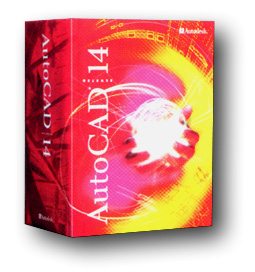
Vernor bought several used copies of AutoCAD software from a customer of Autodesk, which is the software’s original distributor and copyright owner. Vernor then tried to sell those copies on eBay. Autodesk asserted that this sale of the copies violated Autodesk’s exclusive rights under the Copyright Act to distribute the software. So Vernor filed suit to ask the court to declare that such sales were not infringing. (Cases like these, where the accused goes on a preemptive offensive, are called declaratory judgment actions.)

The trial court found in Vernor’s favor. Autodesk sought review with the Ninth Circuit. On appeal, the court reversed, holding that Vernor could not rightly assert that his conduct was protected under copyright law’s first sale doctrine, and that Vernor’s customers’ installation of the software was not protected by the essential step defense.

These defenses failed because the court found that Vernor (and his customers) were merely licensees of the software, not owners.

The Software License Agreement

When Autodesk sold the software to CTA (the company from whom Vernor bought the discs before trying to sell them on eBay), it included a shrinkwrap license agreement, as well as a screen containing the same terms that appeared during the installation agreement.

The agreement provided, among other things, that the software was being provided under a limited license and that Autodesk retained ownership of the copyright in the software. It also placed onerous restrictions on the use and transfer of the software, e.g., the user could not rent, lease or transfer it to other users, or transfer it out of the Western Hemisphere, either physically or electronically.

The first sale doctrine

In general, the owner of a copyright in a work has the exclusive right to determine how copies of the work are distributed. The century-old first sale doctrine, however, is an exception to this general rule.

Under Section 109 of the Copyright Act (17 USC 109), the “owner of a particular copy” of a work may sell or dispose of his or her copy without the copyright owner’s authorization. Selling the copy of a painting you by at an art auction, for example, should not subject you to copyright infringement.

The essential step defense

The Copyright Act also provides that the owner of the copyright in a work has the exclusive right to make copies of the work. But there’s an exception to that exclusivity when it comes to software — the RAM copy made when the software is being used, according to Section 117 of the Copyright Act, cannot give rise to an infringement if that copying is being done by the “owner of a copy” of the software as an “essential step” in using the program.

The lower court’s decision

Vernor won at the lower court level because the court held that he was the “owner” of the copies of software he had bought, and therefore was protected by the first sale doctrine. His customers, also as owners, would be protected by the essential step defense.

Why these defenses failed

The court of appeals held otherwise, namely, that Vernor (as well as the company from whom he had bought the copies, and his customers) were merely licensees and not owners of the software. Only “owners” can claim protection under the first sale doctrine and the essential step defense.

The court looked to the circumstances surrounding the transfer of the software, and formulated the following test to determine that a software user is merely a licensee when the copyright owner: (1) specifies that the user is granted a license, (2) significantly restricts the user’s ability to transfer the software, and (3) imposes notable use restrictions.

In this case, all these criteria were met. Since neither Vernor nor the company he bought the software from were “owners,” these defenses were not available.

Room for criticism

The decision is subject to criticism in a number of ways. First, it might go against the sensibilities of many ordinary folks who think, quite naturally, that when you buy something (like a CD containing software), you own it. This case confirms that that is not always the case.

A second possible criticism is how the case makes possible some strange situations not involving software. What’s to stop hard copy book publishers from entering into shrinkwrap agreements with people who buy the books, purporting to retain ownership and calling the arrangement a license, while placing restrictions on use and transfer? Under the test in this case, it could be an infringement to lend or sell or otherwise distribute that book. Seems like a dangerous way to lock up information. But I guess it’s better than including curses as DRM.

Finally, the case lends itself to criticism in the way it gives great power to the software companies to really tie up tangible media to the detriment of consumers. Once an application has been sold once, where’s the harm to the software company if it’s transferred to someone else? The company has already been paid once, why must it insist on getting paid again? This grabbiness is really no surprise, though, especially when one sees that the likes of the Business Software Alliance joined as amici on the side of Autodesk.

In any event, tangible media for software is becoming a thing of the past. To the extent this case allows some negative consequences, the move to the cloud will mitigate that negativity.

Yelp successful in defamation and deceptive acts and practices case

Reit v. Yelp, Inc., — N.Y.S.2d —, 2010 WL 3490167 (September 2, 2010)

Section 230 of Communications Decency Act shielded site as interactive computer service; assertions regarding manipulation of reviews was not consumer oriented and therefore not actionable.

As I am sure you know, Yelp! is an interactive website designed to allow the general public to write, post, and view reviews about businesses, including professional ones, as well as restaurants and other establishments.

Lots of people and businesses that are the subject of negative reviews on sites like this get riled up and often end up filing lawsuits. Suits against website operators in cases like this are almost always unsuccessful. The case of Reit v. Yelp from a New York state court was no exception.

Plaintiff dentist sued Yelp and an unknown reviewer for defamation. He also sued Yelp under New York state law for “deceptive acts and practices”. Yelp moved to dismiss both claims. The court granted the motion.

Defamation claim – protection under Section 230

Interactive computer service providers are immunized from liability (i.e., they cannot be held responsible) for content that is provided by third parties. So long as the website is not an “information content provider” itself, any claim made against the website will be preempted by the Communications Decency Act, at 47 U.S.C. 230.

In this case, plaintiff claimed that Yelp selectively removed positive reviews of his dentistry practice after he contacted Yelp to complain about a negative reivew. He argued that this action made Yelp an information content provider (doing more than “simply selecting material for publication”) and therefore outside the scope of Section 230’s immunity. The court rejected this argument.

It likened the case to an earlier New York decision called Shiamili v. Real Estate Group of New York. In that case, like this one, an allegation that a website operator may keep and promote bad content did not raise an inference that it becomes an information content provider. The postings do not cease to be data provided by a third party merely because the construct and operation of the website might have some influence on the content of the postings.

So the court dismissed the defamation claim on grounds of Section 230 immunity.

Alleged deceptive acts and practices were not consumer oriented

The other claim against Yelp — for deceptive acts and practices — was intriguing, though the court did not let it stand. Plaintiff alleged that Yelp’s Business Owner’s Guide says that once a business signs up for advertsing with Yelp, an “entirely automated” system screens out reviews that are written by less established users.

The problem with this, plaintiff claimed, was that the process was not automated with the help of algorithms, but was done by humans at Yelp. That divergence between what the Business Owner’s Guide said and Yelps actual practices, plaintiff claimed, was consumer-oriented conduct that was materially misleading, in violation of New York’s General Business Law Section 349(a).

This claim failed, however, because the court found that the statements made by Yelp in the Business Owner’s Guide were not consumer-oriented, but were addressed to business owners like plaintiff. Without being a consumer-oriented statement, it did not violate the statute.

Other coverage of this case:

Enhanced by Zemanta

iPhone using juror causes manslaughter conviction to be overturned

Tapanes v. State, — So.3d —, 2010 WL 3488709 (Fla.App. 4 Dist. September 8, 2010) [Opinion (PDF)]

Defendant was accused of killing his new neighbor and was indicted for murder. The jury convicted him of the lesser charge of manslaughter.

One of the key concepts in the case, and mentioned specifically in the jury instructions, was whether the defenant acted with “prudence” in his dealings with the victim.

During a break from deliberations, the jury foreperson used his iPhone to access Encarta and look up the word “prudence”. Adding to this misdeed, the foreperson shared this information with the other jurors.

Based on this misconduct, defendant filed a motion seeking a new trial, and the trial court denied that motion. So defendant sought review with the Court of Appeal of Florida. On appeal, the court reversed, holding that the defendant was entitled to a new trial.

The appellate court observed that the concept of “prudence” was one that could have been key to the jury’s deliberations. Using the smartphone in this way was analogous to using a dictionary, and that conduct has generally been prohibited in juror deliberations. The appellate court found that at the very least, it could “not say that there [was] no reasonable possibility that the . . . misconduct . . . did not affect the verdict in this case.”

Ed. note: If the jury foreperson was savvy enough to use an iPhone, why on earth was he consulting Encarta? Hello, 1995 called – it wants its web pages back.

Righthaven seeks domain name transfer – relief that is not called for under the Copyright Act

Tactics suggest overreaching on more than just copyright grounds.

News broke over the Labor Day weekend that Righthaven, that enterprise set up to file copyright lawsuits over alleged infringements of articles from the Las Vegas Review-Journal, sued Nevada senate candidate Sharron Angle. The complaint [PDF] contains two claims for copyright infringement over allegations that Angle posted two articles on her website without authorization.

Let’s set aside for a moment any objections or snickering we might have about Righthaven’s approach, or any disdain we may feel about spamigation in general. There’s one paragraph in the Angle complaint which demonstrates a plaintiff mindset that is over the top on just about any reasonable scale.

In addition to the ususal demands for copyright infringement relief in the complaint (e.g., statutory damages, costs, attorney’s fees, injunction, etc.), Righthaven asks that the court:

[d]irect the current domain name registrar, Namesecure, and any successor domain name registrar for the Domain to lock the Domain and transfer control of the Domain to Righthaven.

Say what?

This is a copyright lawsuit, not one for trademark infringement or cybersquatting. Nothing in the Copyright Act provides the transfer of a domain name as a remedy. Such an order would be tantamount to handing the whole website over to Righthaven just because there may have been a couple of infringing items.

The Copyright Act does provide for the impounding and disposition of infringing articles (See 17 USC 503). So it’s plausible that a court would award the deletion of the actual alleged infringing articles. Or if it wanted to be weirdly and anachronistically quaint about it, could order that the infringing files on the server be removed and somehow destroyed in a way additional to just being deleted. In any event, there’s no basis for a court to order the transfer of a domain name as a result of copyright infringement.

I’ll let you, the reader, decide what you will about Righthaven. But if you decide that their tactics are silly, and in some cases uncalled-for, you won’t be alone.

Enhanced by Zemanta

Software contractor not bound by EULA it clicked on behalf of client

BMMSOFT, Inc. v. White Oaks Technology, Inc., 2010 WL 3340555 (N.D.Cal. August 25, 2010)

Plaintiff, a software development company, sued defendant, a company that was performing software installation services for it client, the U.S. Air Force. Plaintiff alleged that defendant violated the End User License Agreement (“EULA”) for the software by copying and distributing the software in violation of the terms of the EULA.

Defendant moved for summary judgment, arguing that it should not be bound by the EULA, since when it purportedly clicked on the “I Agree” button during installation, it was doing so as an agent on behalf of a disclosed principal, namely, the federal government.

The court agreed, finding that the purchase orders clearly disclosed that defendant would be installing the software on behalf of its government client. And the terms of the EULA were clear in designating that the “You” authorized to use the software was not the defendant, but the government, at the location specified in the order.

So the court threw out the breach of license claim. One is left to wonder why facts that support copying and distribution of the Software in a manner prohibited by the terms of the EULA would not also support copyright infringement. But apparently there was no such claim in this case. Perhaps there are some nuances of the defendant’s conduct that would not necessarily violate a condition, but be merely a breach of covenant.

Enhanced by Zemanta
Scroll to top